Jeffrey Siebert was dropping clues again.
If you followed Six Flags Fiesta Texas closely, you probably knew the routine. A strange post would appear, a phrase would feel unusually specific, and park fans would start trying to connect everything before the next clue arrived.
This time, the clues included full moon imagery and a large construction site developing near the water park.
I had never made a complete roller coaster prediction video before. There was plenty of room to be wrong, but the amount of land being cleared made this project difficult to ignore.
Something significant was taking shape at Six Flags Fiesta Texas. The question was whether the visible evidence could narrow down what kind of attraction would actually fit there.
Fiesta Texas was quietly preparing a large site
From the public areas of the park, very little looked unusual.
Guests were riding roller coasters, getting food, and moving through Six Flags Fiesta Texas like they would on any other operating day. Most people had no reason to look for construction clues.
Somewhere beyond those normal pathways, a very large section of land had already been cleared.
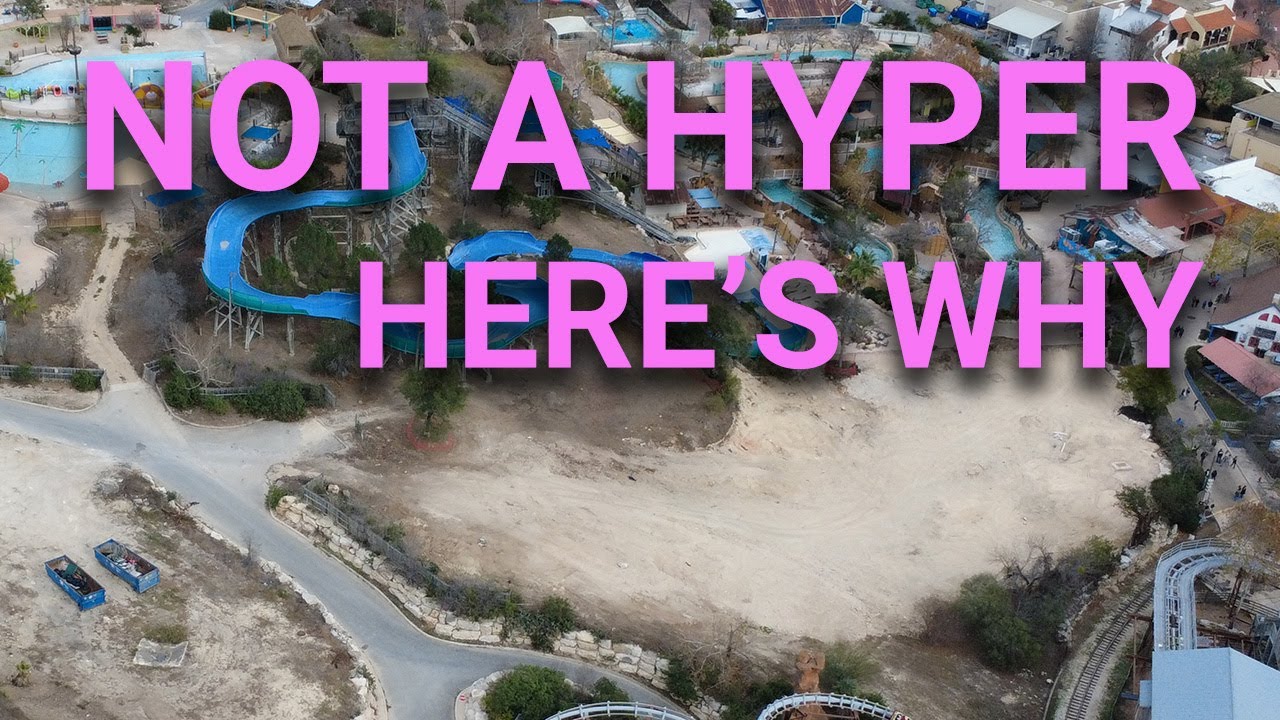
The work was connected to a hillside beside the water park where two slides had been removed. Fencing blocked most of the useful view, so the project initially appeared much smaller from inside the park than it really was.
The full scale only became clear after seeing the construction site from above.
Fiesta Texas is a logical place for a signature attraction
Six Flags Fiesta Texas occupies an interesting position within the larger Six Flags chain.
The San Antonio park operates through much of the year, draws steady regional crowds, and has developed a reputation for attractions that use the quarry terrain as part of the experience.
Iron Rattler climbs along the quarry wall. Superman Krypton Coaster places much of its layout above the edge. Dr. Diabolical's Cliffhanger uses the western setting of Crackaxle Canyon instead of feeling like an isolated roller coaster placed on a flat lot.
Fiesta Texas has also been trusted with unusual ride concepts and highly themed additions.
That history made it reasonable to expect the park's next major project to be designed around the site rather than forced into it.
With a milestone anniversary approaching, a large piece of prepared land carried even more significance.
The original theory was a water park attraction
My first guess was fairly simple.
The construction sat beside the Six Flags Fiesta Texas water park, and two existing slides had been removed. A replacement water attraction seemed like the most direct explanation.
San Antonio has the climate for a major water ride. The hillside could support an attraction that used elevation naturally, and the visible construction originally seemed contained within the former slide area.
I started wondering whether Six Flags could be planning a modern water coaster.
Some of the early clues felt almost space-themed, which led me toward the idea of an indoor water coaster using projections, lighting, and fiber-optic effects. A dark tunnel could create the sensation of moving through space while keeping much of the attraction hidden inside the hillside.
It was a specific theory, but it came from what guests could see at the time.
From inside the park, the project looked like a water park replacement.
The aerial view changed the scale of the project
The water coaster theory started falling apart once I saw the construction site from the air.
The cleared area extended much farther beyond the hillside than the guest pathways suggested. The site was wider, deeper, and involved a significant amount of grading across changing elevations.
This was more than removing two slides and preparing a contained water attraction.
The project included large-scale land clearing and site shaping across an area that appeared designed to support a substantial layout. Whatever was coming could interact with the terrain and create a visible presence outside the existing water park footprint.
My rough estimate placed the cleared site around 155,000 square feet.
That is still only an estimate based on the visible work, but it was large enough to change the discussion. The project no longer looked like a simple slide replacement.
It looked like Six Flags Fiesta Texas was creating space for a major attraction.
The phrase “signature attraction” raised expectations
Jeffrey Siebert referred to the future project as the park's next signature attraction.
That wording stood out.
A signature attraction is expected to represent the park in advertising and give visitors from outside the immediate San Antonio area a reason to plan a trip. It should have enough visual presence or uniqueness to become part of the park's identity.
That does not require a record-breaking roller coaster.
It does suggest something more ambitious than a capacity addition or a straightforward replacement for the removed water slides.
When that language was combined with the aerial construction footage, the list of realistic possibilities became shorter.
The attraction needed to fit the prepared footprint, use the terrain, and carry enough importance to justify the way Six Flags Fiesta Texas was already discussing it.
A traditional hyper coaster was the popular prediction
The prediction I saw most often was a traditional hyper coaster.
I understood the appeal. A coaster around 200 feet tall creates an immediate marketing hook and gives a park a visually dominant new attraction.
Fiesta Texas also lacked a conventional out-and-back hyper coaster, so it was easy to imagine one filling that opening in the lineup.
The site raised a few problems with that idea.
Traditional hyper coaster layouts usually need long track sections and broad turns. My rough comparison put many of those installations at approximately 190,000 square feet or more, while the visible Fiesta Texas construction area looked closer to 155,000 square feet.
That did not make a hyper coaster physically impossible. A custom design can adapt to unusual property boundaries.
It did mean the ride might have to compromise the long, open layout that makes a traditional hyper coaster appealing in the first place.
The timing also made me hesitate.
A hyper coaster had only recently appeared in a Fiesta Texas guest survey. Projects of this scale are normally being developed years before construction becomes visible, so the current site work was probably connected to planning that started well before that survey.
The hyper coaster was the obvious prediction, but the footprint and development timeline did not fit as neatly as I wanted them to.
A family multi-launch coaster fit the property better
A multi-launch family coaster was the first alternative that made practical sense.
Launch coasters can use land more efficiently than a traditional hyper. The layout can double back across itself, follow the hillside, and create a longer experience without depending on extended straight sections.
Fiesta Texas has also placed a strong emphasis on rides that families can experience together.
A family launch coaster or suspended family coaster could bring multiple launches and terrain interaction to a lower height requirement. It would fill a useful gap between the children's attractions and the park's largest thrill coasters.
This idea had appeared in earlier guest surveys, which meant the park could have spent several years studying manufacturers and possible layouts.
The planning timeline worked. The footprint worked. The terrain worked.
I still struggled with the phrase “signature attraction.”
A well-themed family launch coaster could become a major ride, but I was not convinced it fully explained the scale of the clearing or the way the project was being positioned for the anniversary.
It remained a very reasonable possibility. I simply thought the park might be aiming for something more intense.
My prediction was a high-thrill Vekoma multi-launch coaster
After working through the site, the clues, and the realistic ride types, I kept returning to one answer.
My prediction was a high-thrill Vekoma multi-launch coaster with a top hat.
The attraction could use multiple launches to build speed without requiring a massive lift hill. A top hat would give Six Flags Fiesta Texas the height and visual moment people expected from a signature roller coaster while fitting into a layout that could fold back across the prepared land.
The quarry terrain would give the coaster additional elevation without forcing every major moment to come from the ride's structural height.
That combination could create something fast and aggressive while remaining compact where the property required it.
It also felt more consistent with the way Fiesta Texas approaches major projects. The park often creates impact through unusual ride elements, terrain interaction, and strong presentation rather than relying on one record for the entire marketing campaign.
The full moon clues pointed toward werewolves
The repeated full moon imagery was difficult to separate from the prediction.
Full moons can support several themes, but the most direct connection is a werewolf.
A werewolf story would fit Crackaxle Canyon surprisingly well. The park could use the wooded hillside and quarry setting to create the feeling of a creature moving through an isolated part of Texas.
The coaster trains could race through the terrain as part of a hunt or escape, with the launches representing sudden bursts of movement.
That theme could also support strong nighttime lighting and seasonal connections without requiring the entire attraction to depend on screens or enclosed scenes.
The clues did not prove that Six Flags Fiesta Texas was building a werewolf roller coaster. They made the theme a reasonable part of the working theory.
Vekoma made sense as the manufacturer
Vekoma had become much more active in the North American market.
Its newer coaster designs included smooth trains, modern track systems, compact layouts, and launch technology that could serve both family and thrill-focused attractions.
Six Flags was already working with Vekoma again, including The Flash: Vertical Velocity at Six Flags Great Adventure.
A custom Vekoma launch coaster could combine the efficient footprint of a modern multi-launch ride with the scale needed for a Fiesta Texas signature attraction.
Vekoma also offered enough flexibility that the site would not have to accept a standard layout. The coaster could be designed around the hillside, the surrounding attractions, and the areas where Six Flags wanted the track to become visible.
That made the manufacturer feel like a stronger fit than a company whose most familiar hyper coaster products depended on broad, open land.
AlpenFury showed another way to build a marquee coaster
AlpenFury at Canada's Wonderland was another reason I kept thinking about a modern launch coaster.
The Premier Rides attraction uses multiple launches, a compact path across an existing park, and a dramatic vertical moment through Wonder Mountain. Its identity comes from the complete experience rather than following the familiar shape of a traditional hyper coaster.
Fiesta Texas could take a similar approach without copying the ride.
A top hat rising above the quarry would provide a recognizable skyline element. Multiple launches and terrain interaction could then produce the speed and pacing expected from a major thrill coaster.
The result could feel large without requiring the long rectangular footprint of an out-and-back hyper.
That was the balance I thought this Six Flags Fiesta Texas construction site was pointing toward.
The prediction included some wishful thinking
I was never pretending that the available clues confirmed a high-thrill Vekoma coaster.
The land clearing showed a large project. The location showed that the terrain would matter. The full moon references suggested a theme, and the phrase “signature attraction” told us how the park wanted people to think about the addition.
The exact ride system was still speculation.
My prediction also included some wishful thinking because a terrain-driven Vekoma multi-launch coaster was something I genuinely wanted Fiesta Texas to build.
The difference was that the idea fit the visible conditions well enough to survive closer inspection.
It could create height without a hyper coaster footprint. It could use the hillside instead of flattening it. It could support a werewolf theme and still feel significant enough for a milestone anniversary.
That was enough for me to plant a flag, even with plenty of room to be wrong.
The construction was already telling us this was important
At the time of this prediction, everyone was working from the same public clues.
Six Flags Fiesta Texas was teasing the project. Large-scale grading was visible from the air. The removed water slides explained where the work began but not how far it had expanded.
The park had not announced a manufacturer, layout, opening date, or final attraction name.
What the site did show was that this would not be a minor addition.
Fiesta Texas had been planning the project long before the first construction footage appeared. With the anniversary approaching, the cleared land looked like the beginning of a meaningful new chapter for the San Antonio theme park.
My answer was a werewolf-themed, high-thrill Vekoma multi-launch coaster with a top hat.
Whether every piece of that prediction survived the eventual announcement was something only the park could answer.